Cultivate Vitality, Strength & Deep Inner Peace.
A step-by-step guide through the twelve postures of Surya Namaskar — unifying breath, movement, and intention into a daily practice that stays with you.
Seven years of guiding women across the globe · By Sakshi Juyal
Read the transcript
Namaste. Hari Om. Welcome to the Surya Namaskar Master Course, ‘The Complete Guide to Traditional Sun Salutation’. I’m delighted to have you join us on this transformative journey. I am Sakshi Juyal, your yoga teacher, and I’m thrilled to share with you this profound practice of Surya Namaskar, also known as Sun Salutation.
Originating from the ancient yoga traditions, Surya Namaskar is a dynamic sequence of asanas that pay homage to the sun, the source of all life and energy. Throughout this course, you’ll not only learn the physical postures of Surya Namaskar but also explore its rich history, its benefits for mind and body, and how to integrate it into your daily life. Along with the physical aspects of anatomy and alignment, we’ll also be learning about the internal and subtle aspects of it, with breathing patterns, mantra chantings, beej mantras, and energy chakra association.
Whether you are a seasoned yogi looking to deepen your practice or a complete beginner taking your first steps on the mat, this course is designed to meet you where you are. Each lesson is thoughtfully crafted to provide you with comprehensive guidance, step-by-step instructions, and ample opportunities for self-reflection and growth. By the end of our journey together, you’ll not only master the physical sequence of Surya Namaskar but also cultivate a deeper sense of mindfulness, connection, and well-being.
So whether you are ready to greet the sun with open arms or simply curious to explore the practice of Surya Namaskar, I invite you to join me on this enriching adventure. Thank you for choosing to embark on this journey with me. Let’s begin.
Twelve postures, learned slowly · 14‑day guarantee
Meet the twelve movements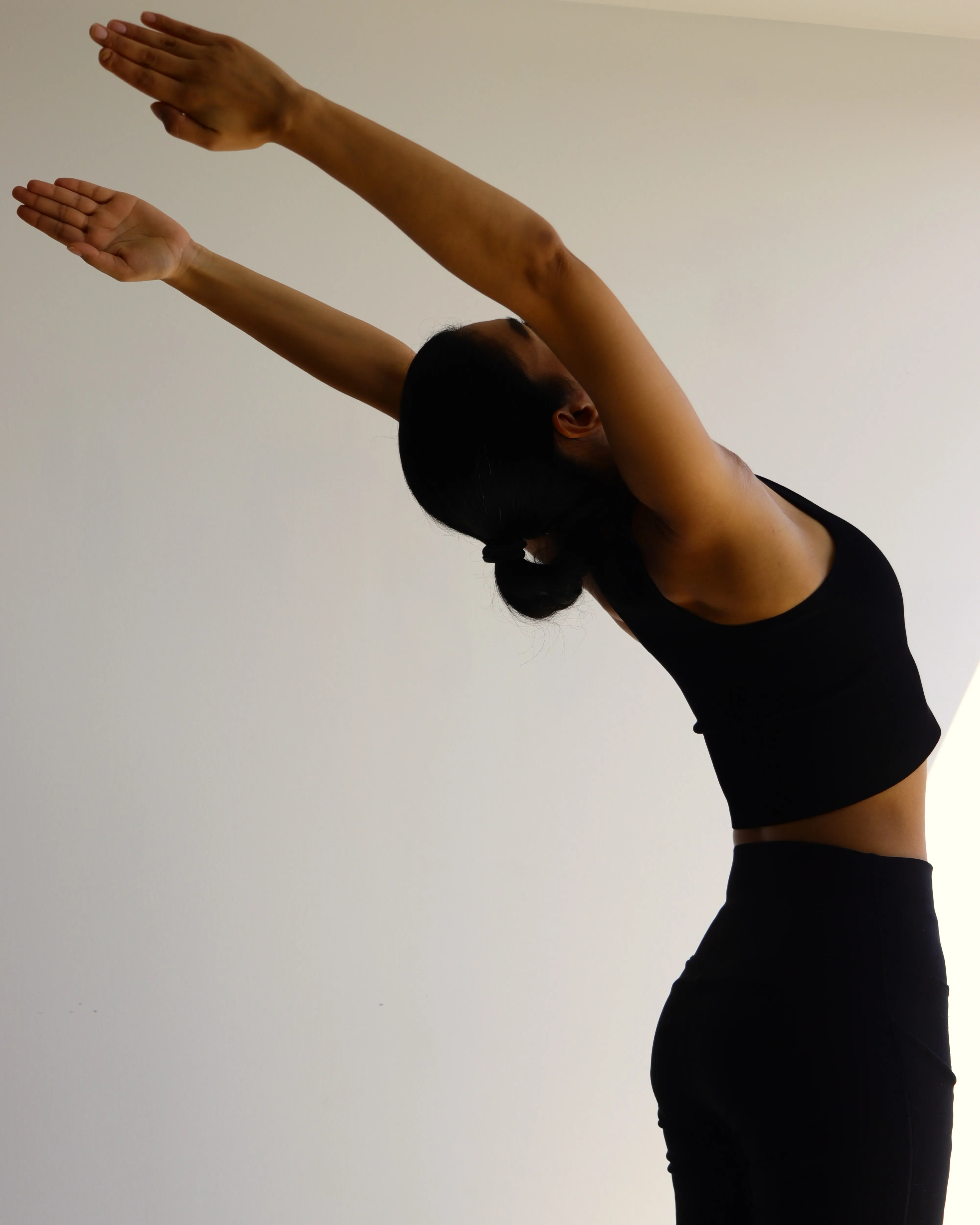
You are likely
here because...
You want to stand taller in your own body — and you would rather earn that strength slowly, from the ground up, than force it.
You're ready to work toward something concrete — a practice that builds week over week, not just a routine you repeat.
You want movement with real depth — strength and surrender, effort and stillness, in the very same breath.
You crave that rare state of flow, when effort disappears and each movement simply follows the last — breath leading body, body leading breath.
You're ready for yoga in its original sense — Yuj, to unite — one practice that holds your body, your breath, and your attention at once.
The Complete Sequence
Twelve Movements,
Each One a Teacher.
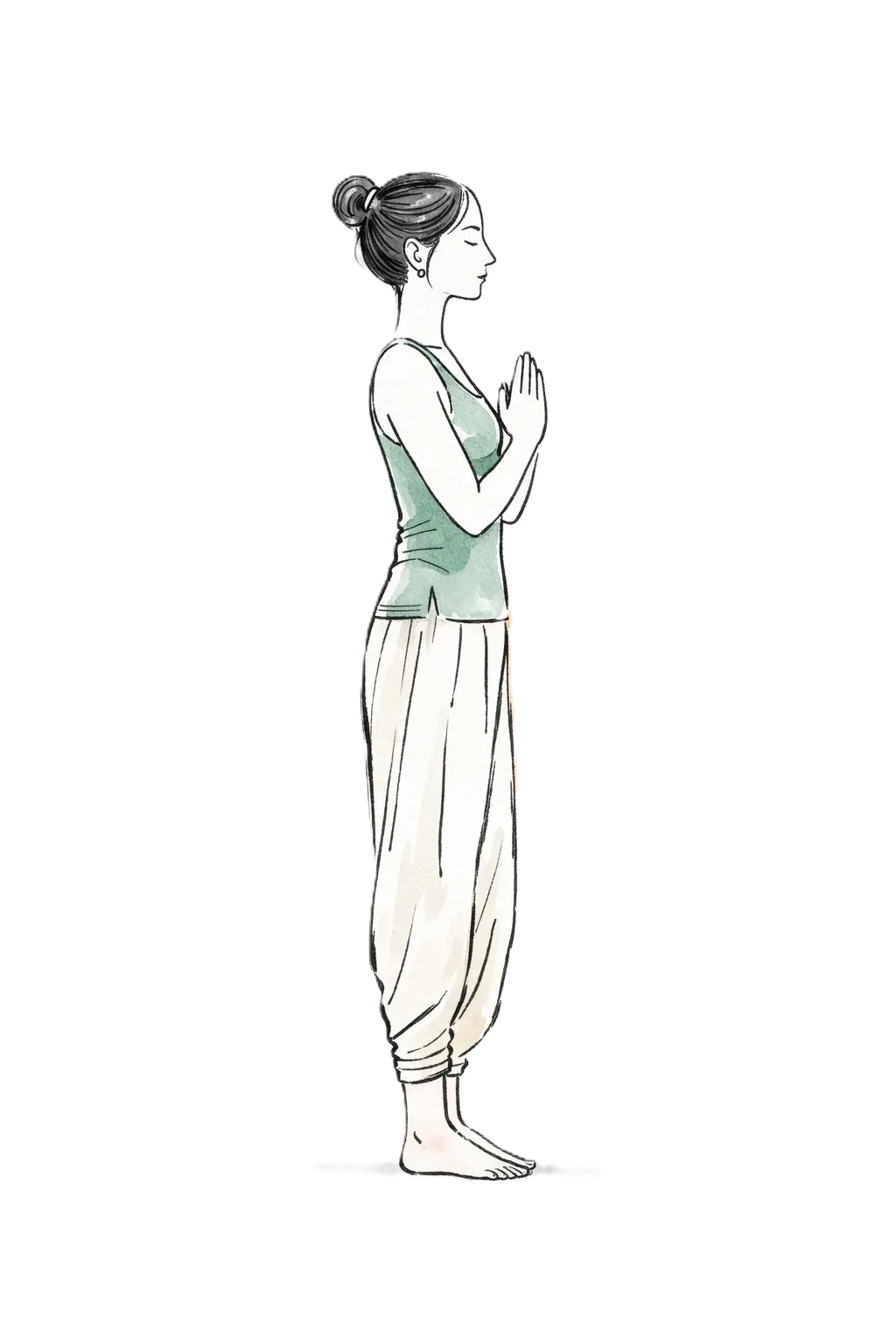
Pranam Asana
Signals safety to a hyper-vigilant nervous system, easing the stress response.
Centers an overwhelmed mind, creating a boundary between daily demands and inner peace.
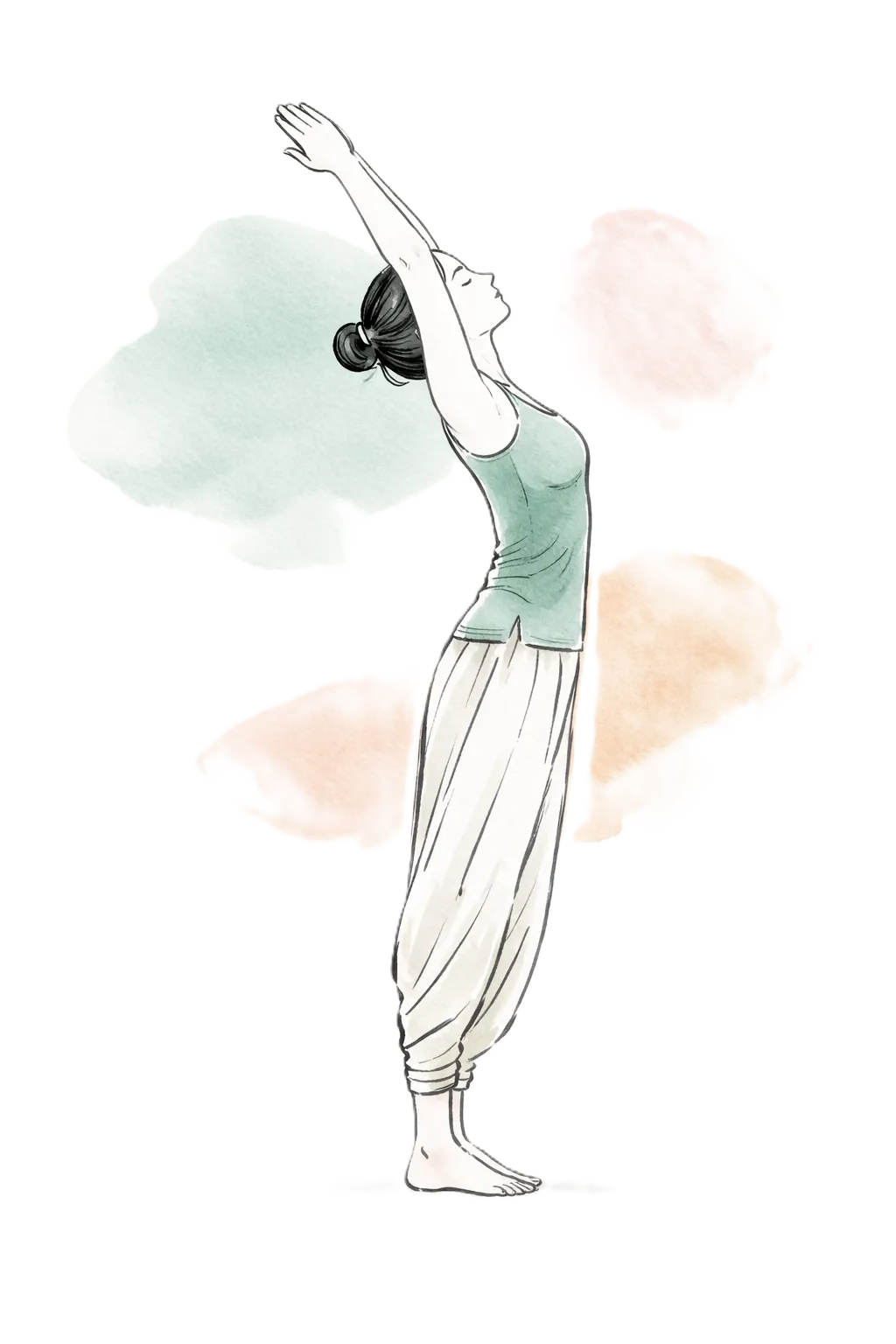
Hastottana Asana
For breath that sits high and shallow in the chest.
Gently creates space in the abdomen, encouraging a sense of ease in the lower body.
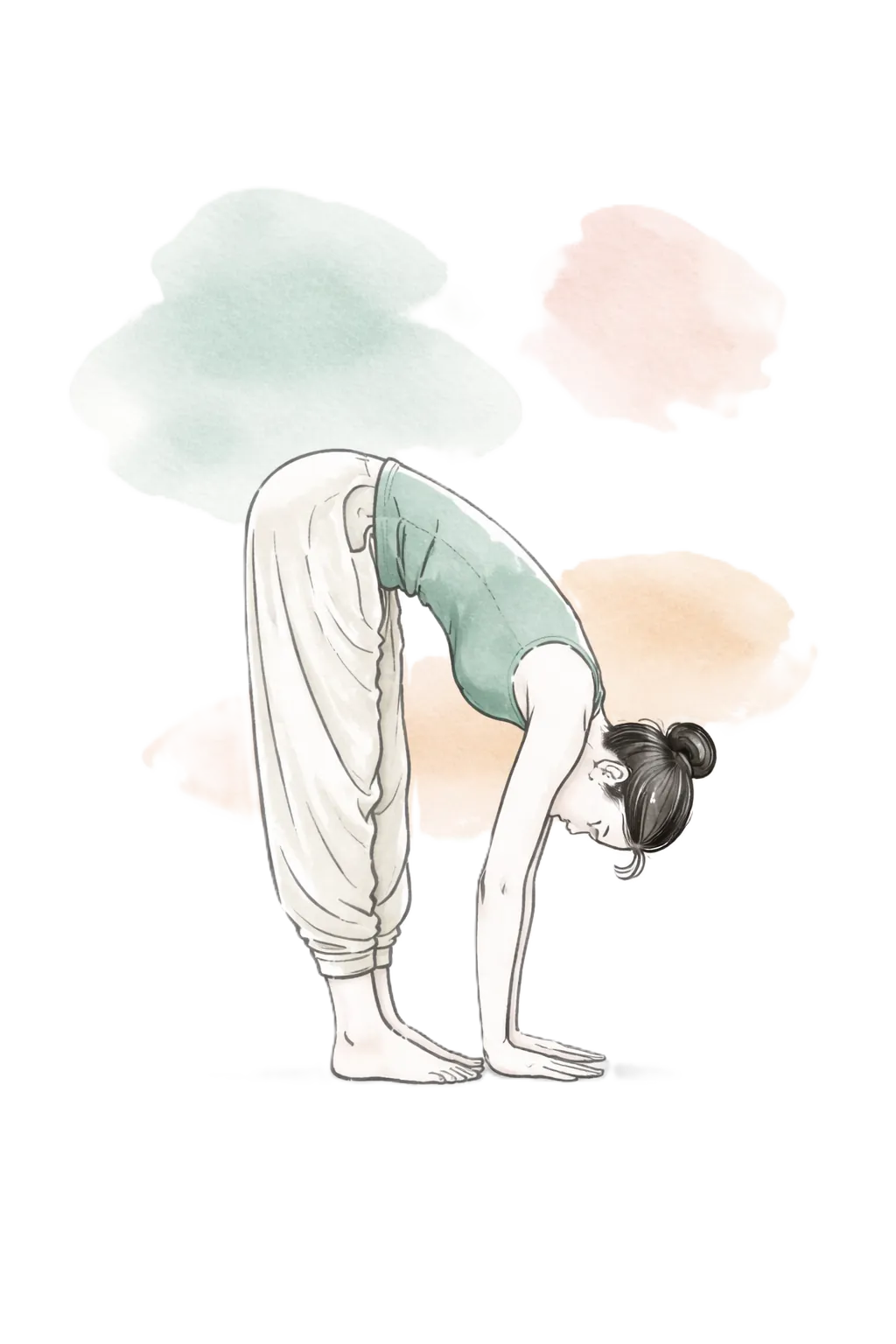
Padahasta Asana
For mornings that start slow and stay foggy.
Eases lower-belly heaviness, deeply soothing during your cycle.
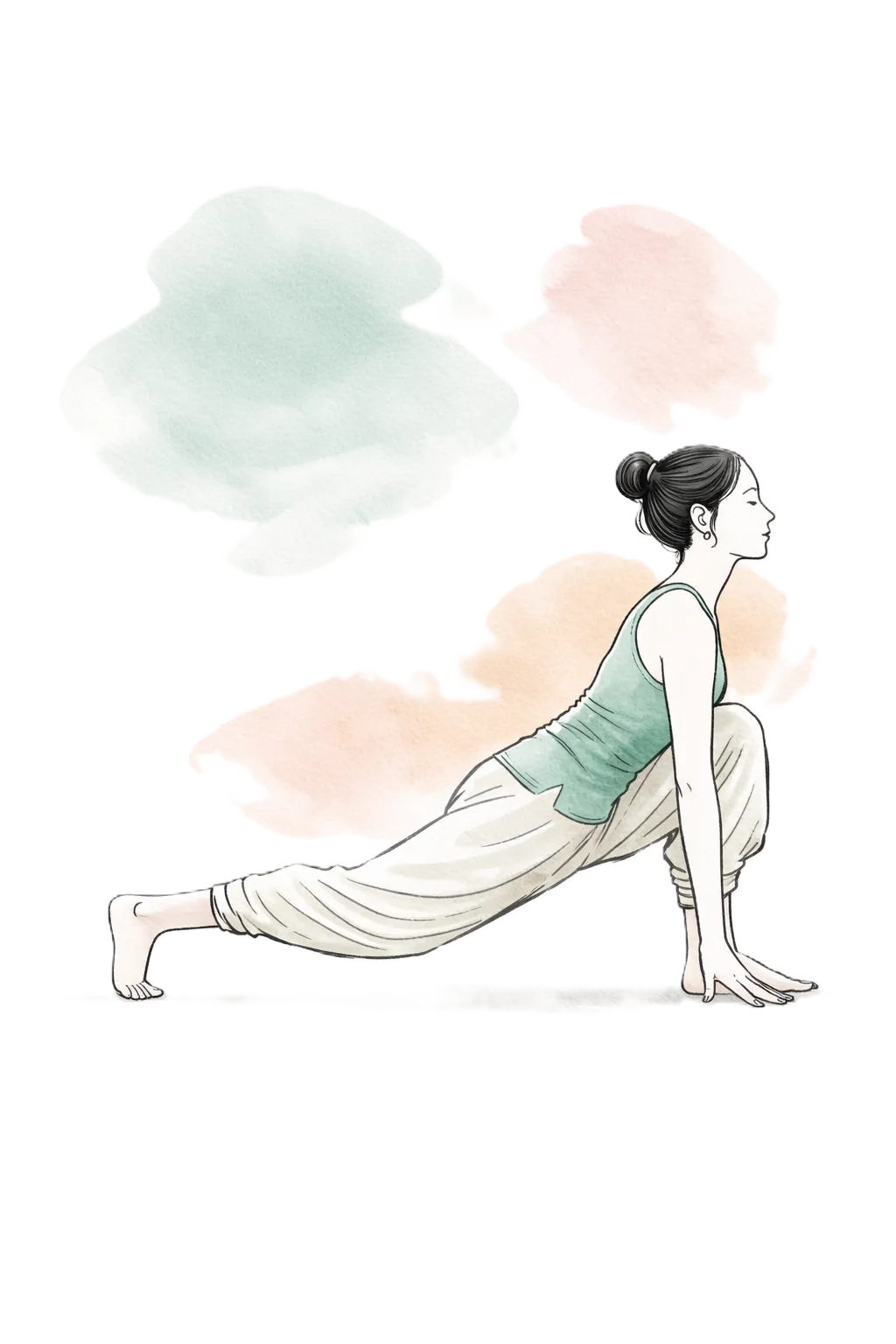
Ashwa Sanchalan Asana
Deeply opens the psoas — where the female body unconsciously stores unexpressed emotion.
Creates physical spaciousness in the lower abdomen.
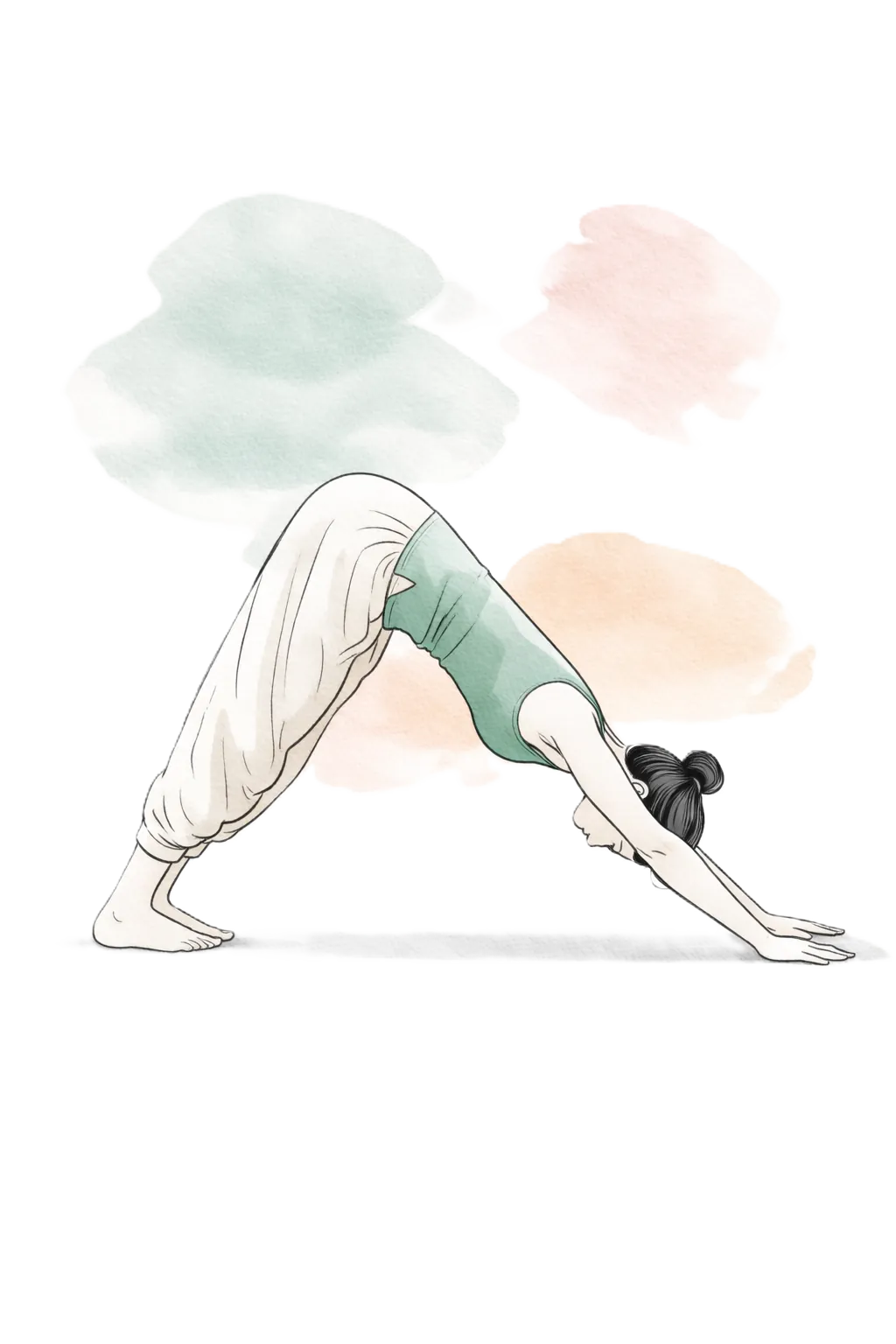
Parvata Asana
Inverts blood circulation, inviting a sense of internal balance.
Lengthens the lumbar spine, providing soothing relief for tired lower-back muscles.
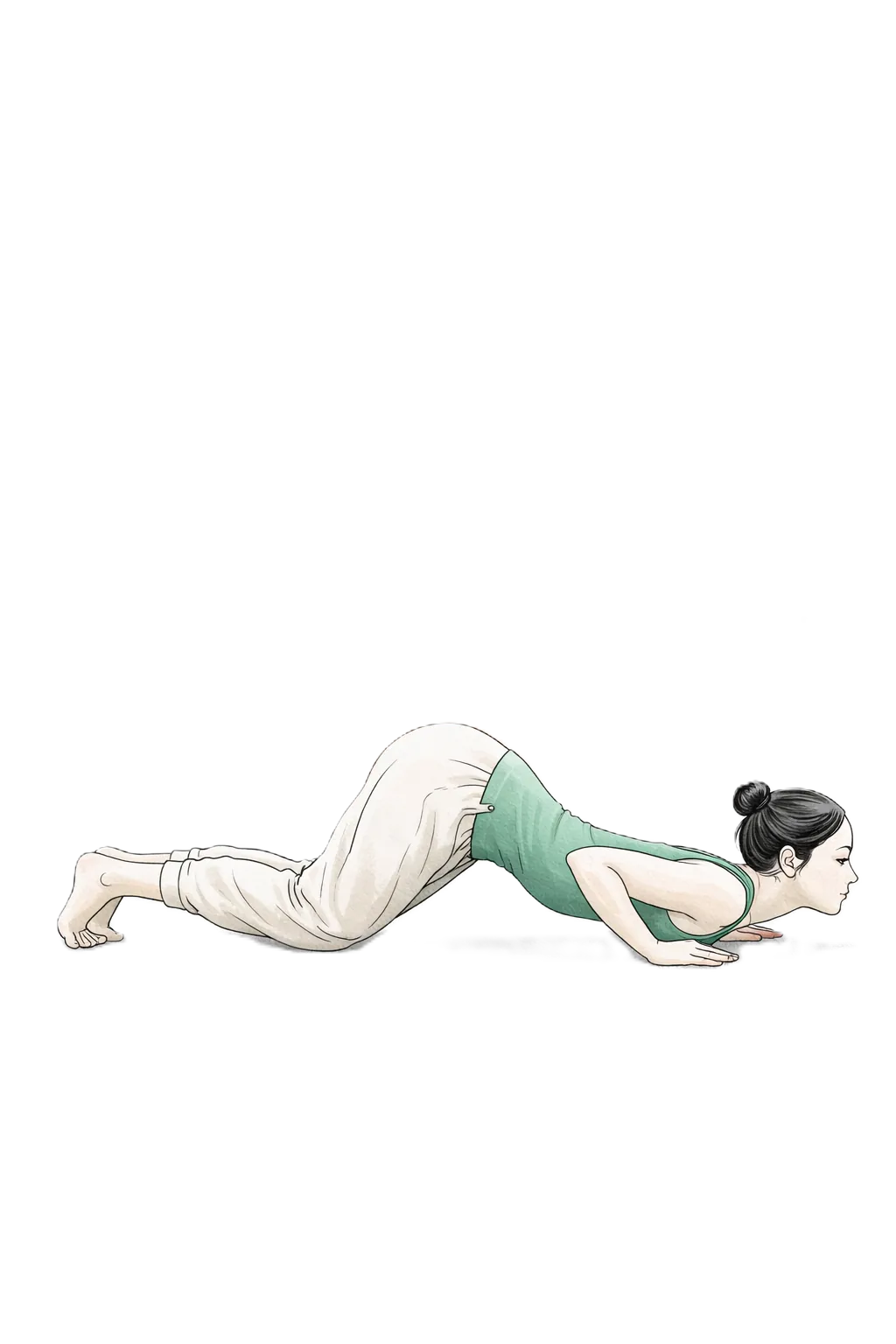
Ashtanga Namaskar
Fosters a deeply primal, grounding sense of physical stability.
Safely builds core and upper body resilience without bearing down on the pelvic floor.
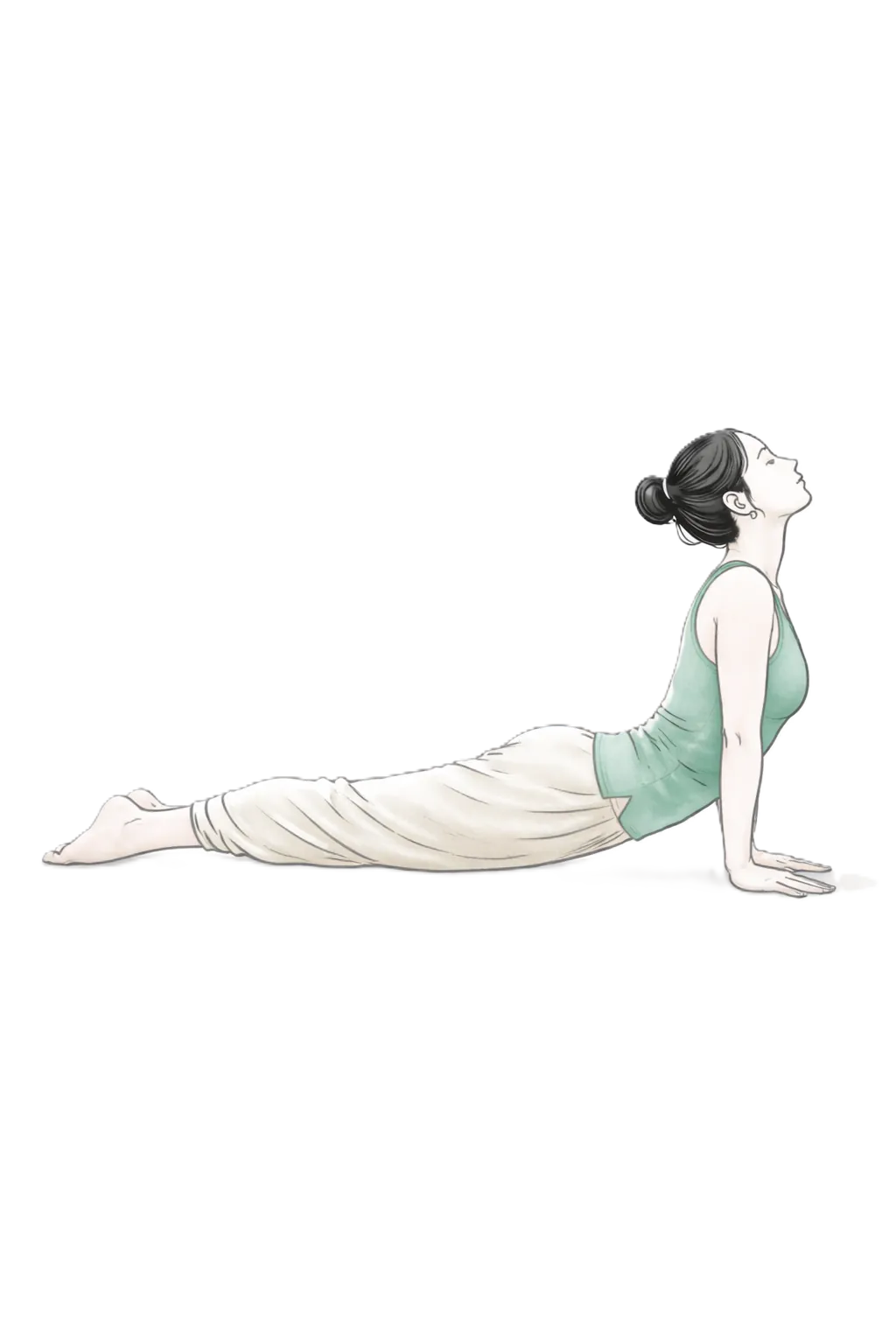
Bhujanga Asana
Counters the physical "slouch" of exhaustion by gently opening the heart center.
Gently massages the pelvic region, which many find soothing during cramping.
Parvata Asana
← The sequence now mirrors back
Washes the nervous system with fresh oxygen, shifting the body into "recovery mode".
Stretches out tight calves and hamstrings, releasing the physical residue of stress.
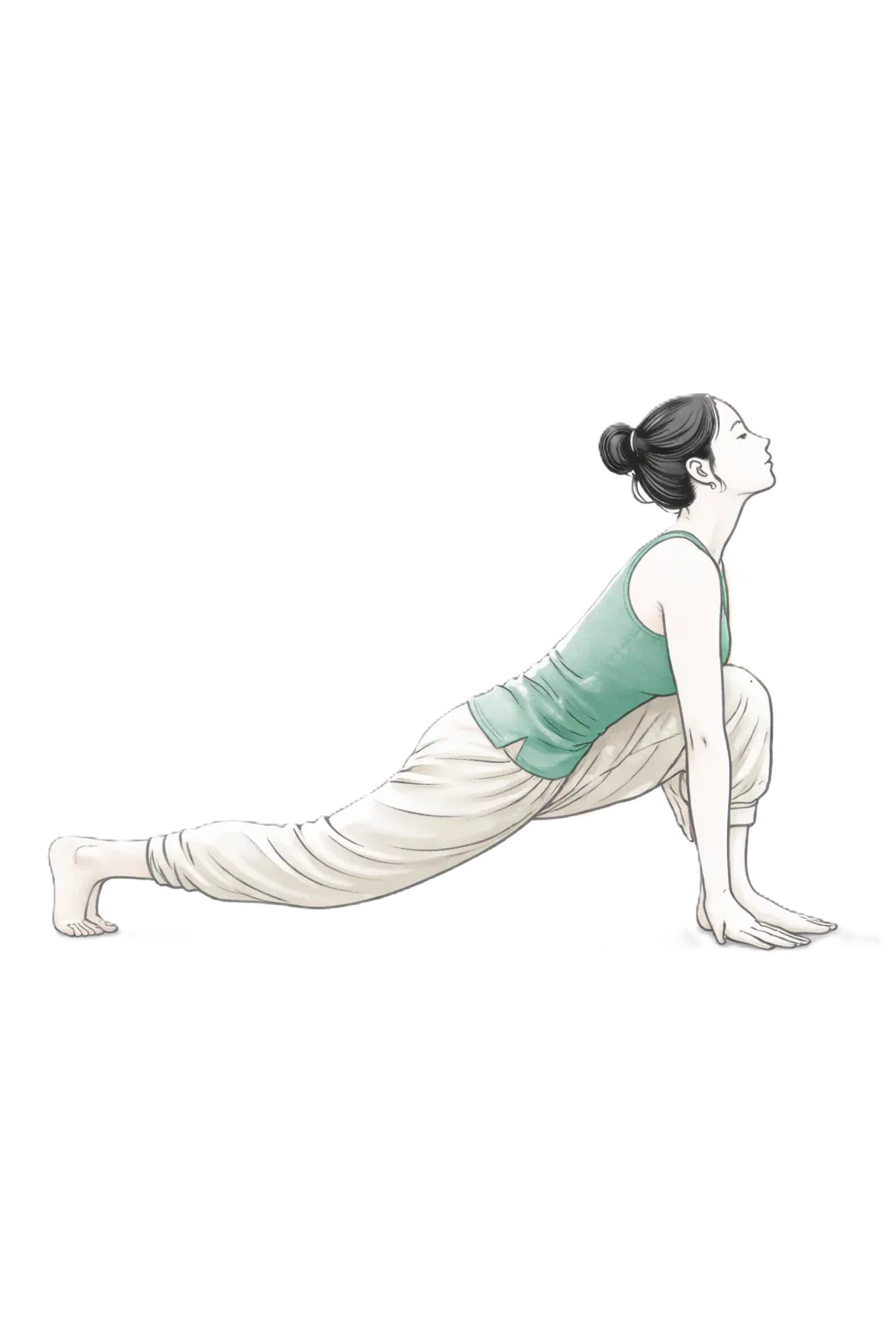
Ashwa Sanchalan Asana
Restores physical and energetic symmetry to the pelvic bowl.
Melts away lingering emotional rigidity stored in the hips, inviting bodily lightness.
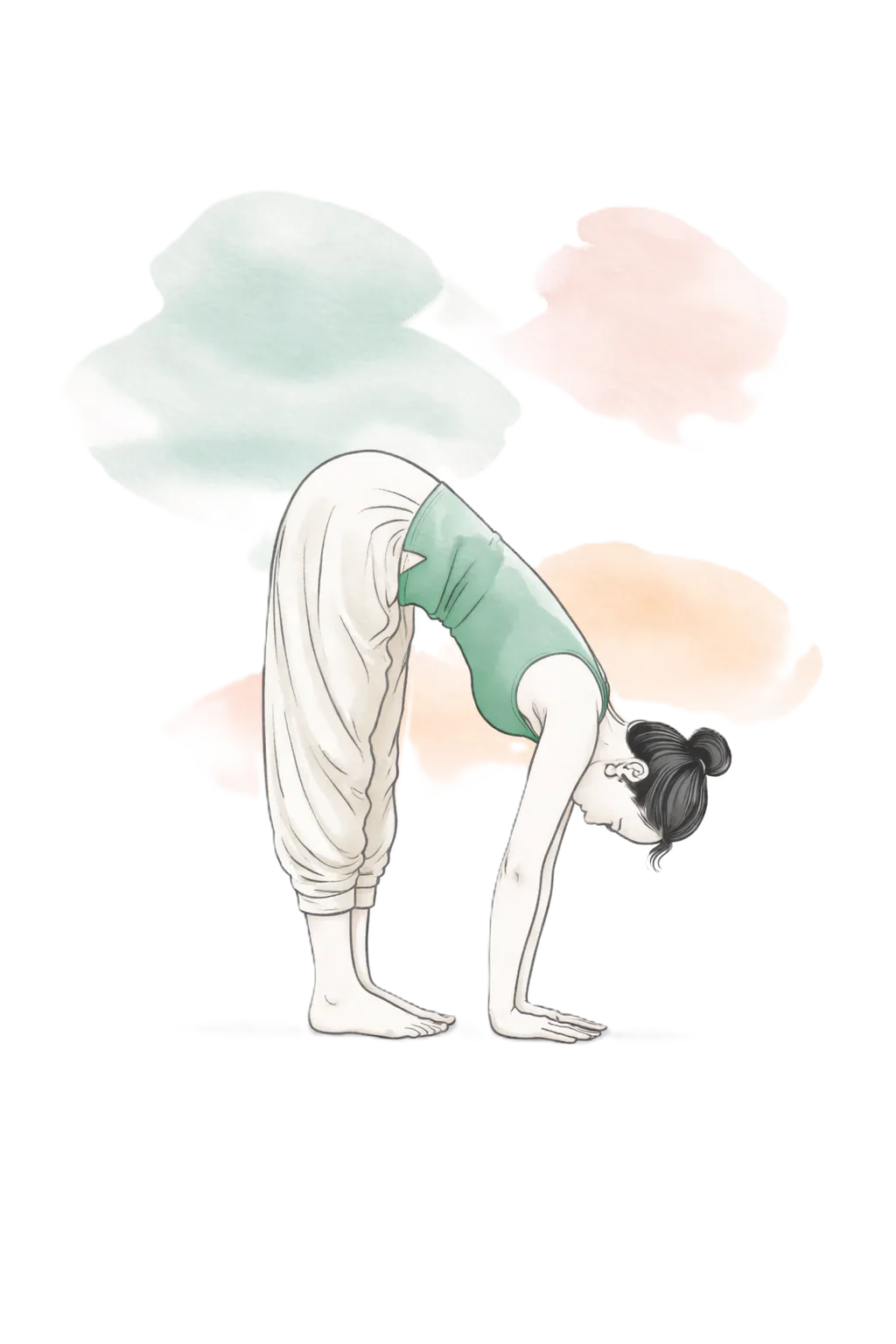
Padahasta Asana
Forces the surrender of mental fatigue, cooling the nervous system.
Decompresses the entire posterior chain, unwinding the knots of prolonged sitting.
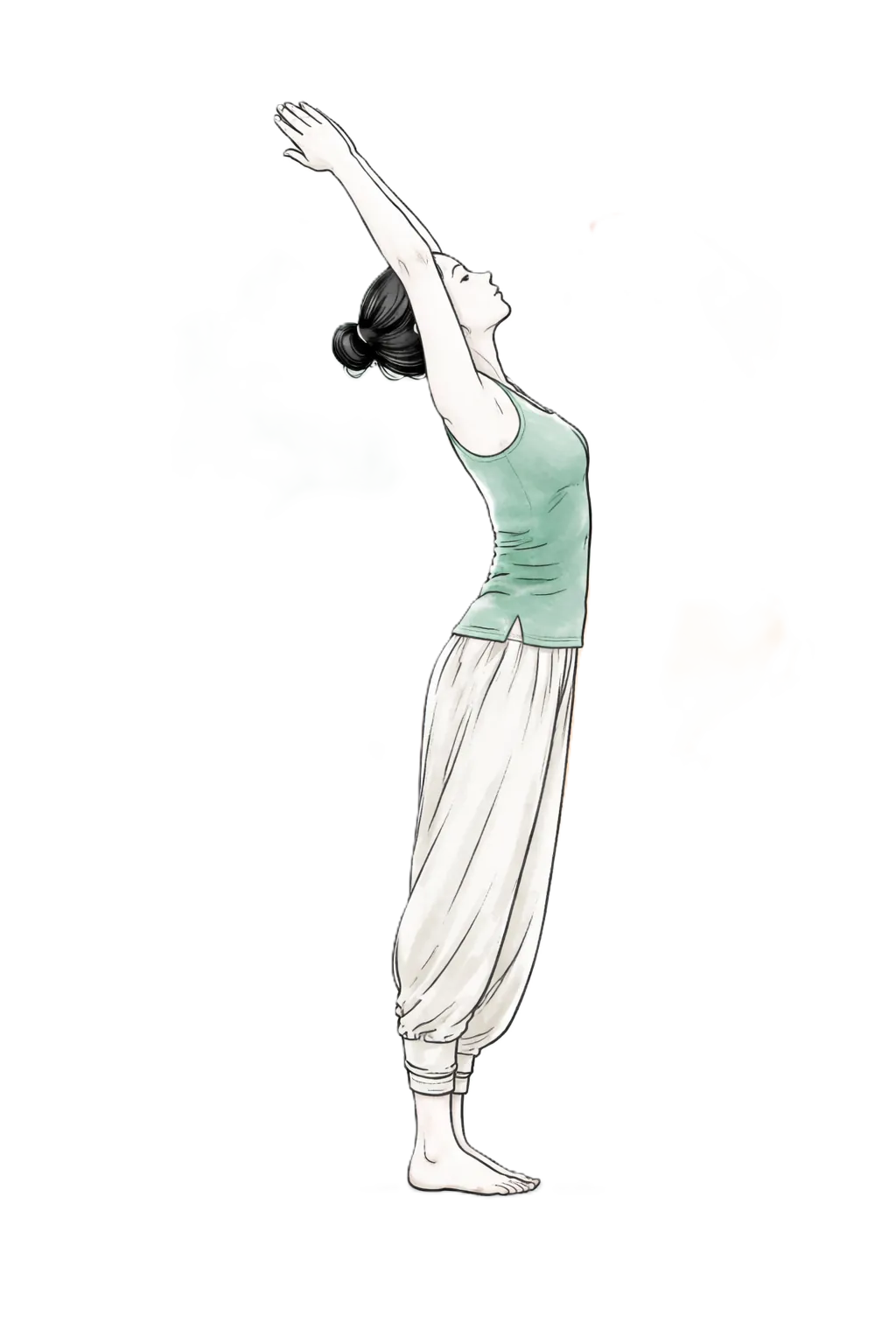
Hastottana Asana
Safely lifts a renewed, calm energy back up into the body.
Re-expands the chest for a final, empowering breath that banishes restriction.
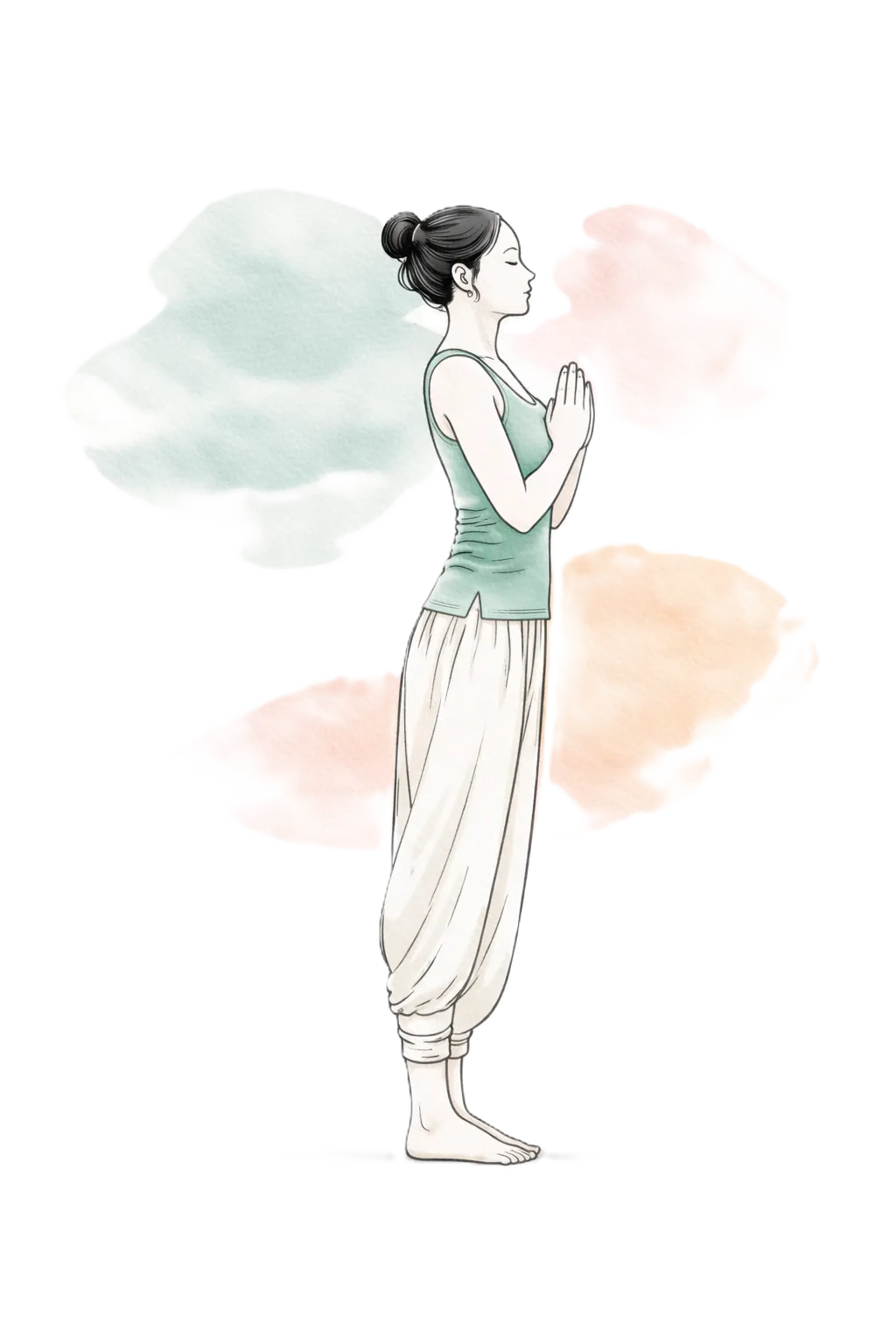
Pranam Asana
Invites a steady, settled rhythm as you complete the sequence.
Integrates a deep, lasting sense of bodily safety to carry off the mat.
A Gift from the Course
You’ve seen the complete sequence.
Now, feel it.
Free Sample · The Complete Sequence
Watch Sakshi guide you through the complete sequence of Surya Namaskar — all twelve postures, with breath cues, alignment notes, and the intention behind each step.
The Architecture
of Practice
Exploring the rich history, alignment, and the physical sequence of the 12 traditional postures.
- ✓ Detailed video breakdown of each posture
- ✓ Alignment cues and common mistakes
- ✓ Historical and philosophical context
You'll leave with a safe, confident practice of all 12 postures.
Integrating breathing patterns, mantra chantings, beej mantras, and energy chakra associations.
- ✓ Pranayama techniques paired with each posture
- ✓ 12 Surya Namaskar mantras and their meaning
- ✓ Chakra activation map for the full sequence
Your practice shifts from physical exercise into a moving meditation.
Discovering modifications using simple props like blocks to support all body sizes and manage injuries.
- ✓ Prop-assisted variations for every posture
- ✓ Injury-aware modifications and contraindications
- ✓ Body-type adaptations for beginners to advanced
You'll know exactly how to adapt the practice to your unique body.
Approaching the sacred 108 rounds as a devotion — unhurried, one round at a time, at a pace your body sets.
- ✓ A gentle pacing rhythm for the full 108
- ✓ Mental resilience and pacing strategies
- ✓ The sacred significance of 108
You'll meet the 108 Surya Namaskars as a devotion, at a pace that is yours.
Your Guide
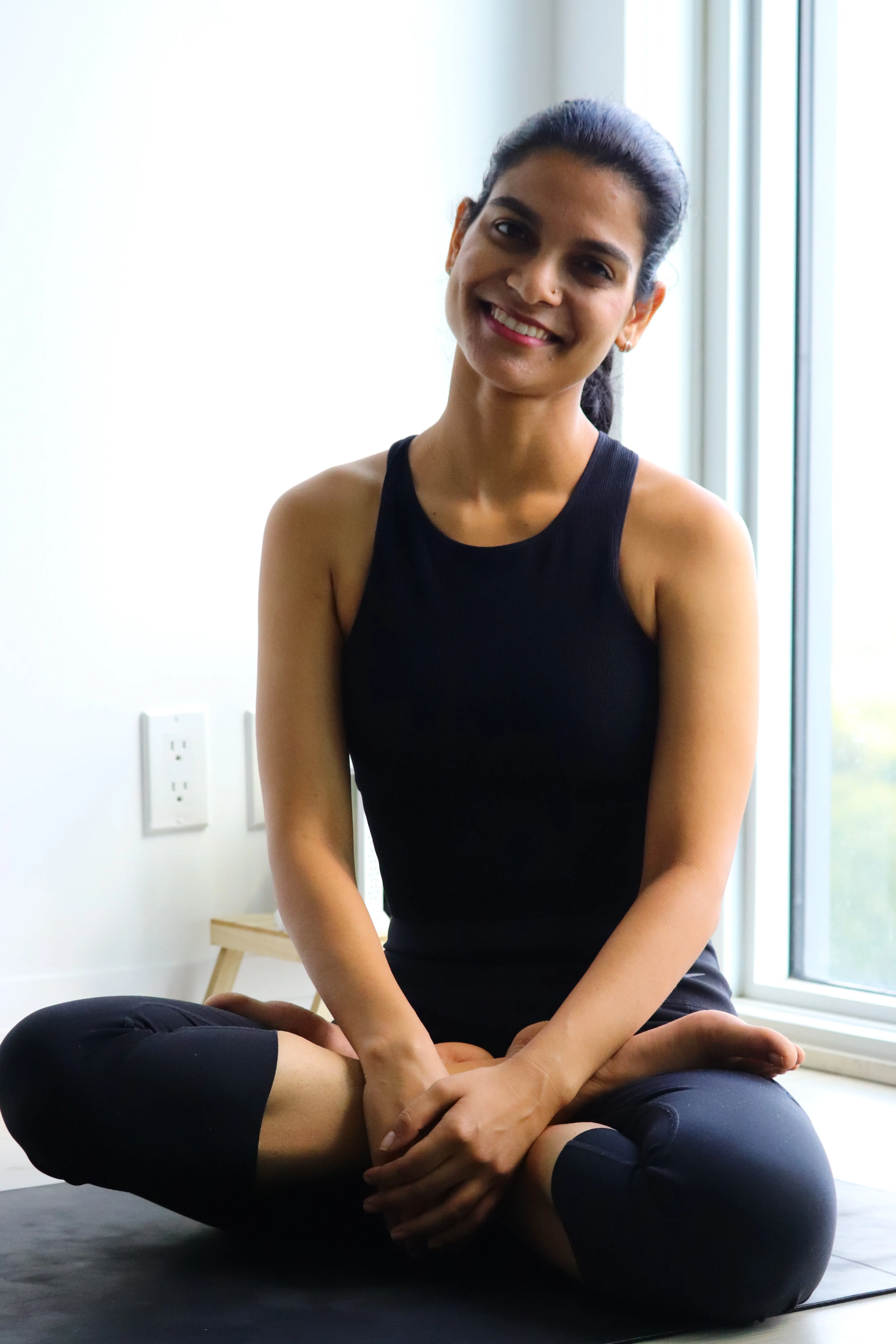
Sakshi Juyal
I have been a full-time yoga teacher since 2019 — seven years of guiding women, in person and online. I trained in the classical Hatha tradition at India’s national institute for yoga in New Delhi, I am certified by the Yoga Certification Board, and I grew up in a home where breath, yogic philosophy and Ayurveda were simply part of an ordinary day. My objective is simple: to make this wisdom feel as accessible as it truly is.
My teachings extend far beyond physical postures — embracing Pranayama, Yoga Nidra, and meditation. I blend traditional texts with insights from Ayurveda to nurture holistic, integrated well-being.
Learn More About Sakshi
Frequently Asked
Questions
One-time. You pay once and keep lifetime access to all course materials. There are no recurring fees, hidden charges, or surprise renewals. The course is yours forever.
The 14-Day Alignment Guarantee
If the practice isn’t right for you, write to care@yogneeti.com within 14 days of your purchase and we’ll refund you in full, as long as you’ve viewed 15% or less of the curriculum. One purchase, lifetime access, and no renewals — ever.
Sakshi advises that the practice should be avoided during the onset of menstruation. However, if there are no adverse effects, the practice may be resumed towards the end of your period. For many women, regular practice supports a greater sense of ease and rhythm, though this varies from woman to woman.
Every pregnancy is different, so please use this as a starting point and check with your doctor first. Many women continue gently through the early weeks, being mindful around deep backbends and intense twists. After childbirth, a gentle return is common around 40 days — once you've been cleared to resume movement.
This program is deeply inclusive. Modifications may include using props like blocks or straps to support alignment, or widening stances for stability. For example, in poses like Pranam Asana, you can keep your feet wider than hip distance to maintain better balance.
Practicing Surya Namaskar when feeling excessively fatigued or exhausted can strain the body. It is important to prioritize rest and recovery when experiencing fatigue, opting for a gentle form of movement or relaxative practice.
Not if you use the provided modifications. Individuals with wrist pain can practice on fists or use wrist supports to reduce strain. You can also perform Cobra pose with your forearms on the ground to alleviate pressure.
People suffering from high blood pressure should not practice semi-inverted postures. Poses like downward facing dog or the standing forward bend may need to be approached with caution, modified, or skipped altogether to avoid straining the cardiovascular system.
The ideal time to practice is during sunrise or sunset, the most peaceful time of the day. The practice should always be done on an empty stomach, which is traditional practice and more comfortable for movement.
Absolutely not. Whether you are a seasoned yogi or a complete beginner taking your first steps on the mat, this course is designed to meet you where you are. You will start slow and use props to build a strong foundation.
Forever. Once you enroll, you have unlimited, lifetime access to every module, video, and resource. You can revisit the material as often as you like, at whatever pace suits your journey.
Absolutely. The course is fully self-paced. There are no deadlines, no scheduled sessions, and no pressure. Whether you complete it in a week or over several months, the practice unfolds on your timeline.
Disclaimer: Please consult a qualified healthcare professional before beginning any new exercise program, especially if you have pre-existing medical conditions or injuries.
Also here
If this isn’t your door, there is another one.
Some women arrive needing the structure of a program. Others need somewhere to return to on an ordinary Tuesday, with no pathway to keep. The Practice Library is the second kind of place — a living collection of sessions, sorted by time, by mood, and by what your body can hold today.
Explore the Practice Library$49 per month. The first seven days are free — nothing is charged until day eight. One click ends it, whenever you like.